Central New York Research. The eclectic ramblings of doing genealogy and growing up in that part of Upstate New York that is the central and Finger Lakes regions. With ancestors all over the northeast and beyond, there will be forays outside the area with trips and news on family history as well as local history.
Showing posts with label occupations. Show all posts
Wednesday, August 15, 2018
Wednesday, January 11, 2017
Friday, September 9, 2016
Ten Ways To Find Your Ancestor's Occupation
How do you find what your ancestor’s occupation was?
1-
Census Records
How often have you paid attention
to the occupation line on a census record? For many of us we’re going to find
keeping house, farmer, laborer and such repeatedly. However, even these can
indicate something about our ancestors. The girl listed as keeping house has
likely completed her schooling and will be marrying in the next few years. The
laborer is somebody just starting out. Does it mention farm or an indication of
another career he will be entering? Also, often in rural areas an occupation
will be listed for somebody that works partly as a farmer and partly as
something else. Don’t overlook this obvious source!
2-
City or Rural Directories
We often think of city directories
as they list the person’s occupation and who they work for. You can discover
not only the occupation, but also their associates this way. However, did you
know that some areas produced rural directories at various times as well?
Although often not every year like a city directory, these will list people in
rural areas, both farmland and small communities, just like the city
directories do.
3-
Wills and probate
Occasionally a will might list a
person’s occupation. More often than not, though you have to read between the
lines to determine what their occupation was. Look through the entire probate
packet, paying special attention to inventories and any property that is
disposed of. Did they have a lot of acres? That could be indicative of a
farmer. What items are listed on an inventory? Can any of them be associated
closely with a particular occupation or are there people owed or who owe the
deceased money? Determine what these have groups have in common and you can
discover indirect evidence of your ancestor’s occupation!
4-
Compiled genealogies and biographies
Many times in a genealogy or a
biography about your ancestor, the occupation is a prominent part of their
story. Don’t forget that many of the county and local histories published in
the latter part of the 1800s contained many biographies of not only the leading
citizens, but also anyone who was willing to subscribe to their publication!
5-
Directories of occupations
Sometimes you can find a list of people that followed a certain
profession or in earlier times, there were often apprenticeship records.
6-
Obituaries
An obituary is like a mini
biography of the deceased person. This is a place where I find many people’s
occupations that I hadn’t known about or was uncertain of before then.
7-
Cemeteries
Did they have something carved on their stone that might represent a
given occupation? Occasionally a cemetery record might list an occupation of
the person to differentiate people with the same name. I’ve never actually seen
this, but I wouldn’t rule it out either.
8-
Draft registration cards
When registering for the draft in
WWI and WWII the cards asked for your usual place of employment.
9-
Marriage records
Some, not all marriage records
have a place to record the groom and bride’s occupations.
10-Newspapers
Beyond
the obvious listings, look for advertisements that your ancestor might have
placed for their business. Look at police articles. I once found one where my
father complained of getting flat tires on his delivery truck due to kids
throwing glass bottles into the road and shattering them. If I hadn’t already
known he delivered fuel oil, I would have found that and an idea of one area of
his territory from that article. If you can’t do a search on a name, scan all
articles in a newspaper, as you never know what they might have been up to!
Thursday, September 8, 2016
Crafts and Skills of Our Ancestors and Ourselves
How many people as they start diving into their ancestors’
lives wish they knew what a typical day was like? What did the people do on a day-to-day
basis? What were their interests and how did they actually do certain things?
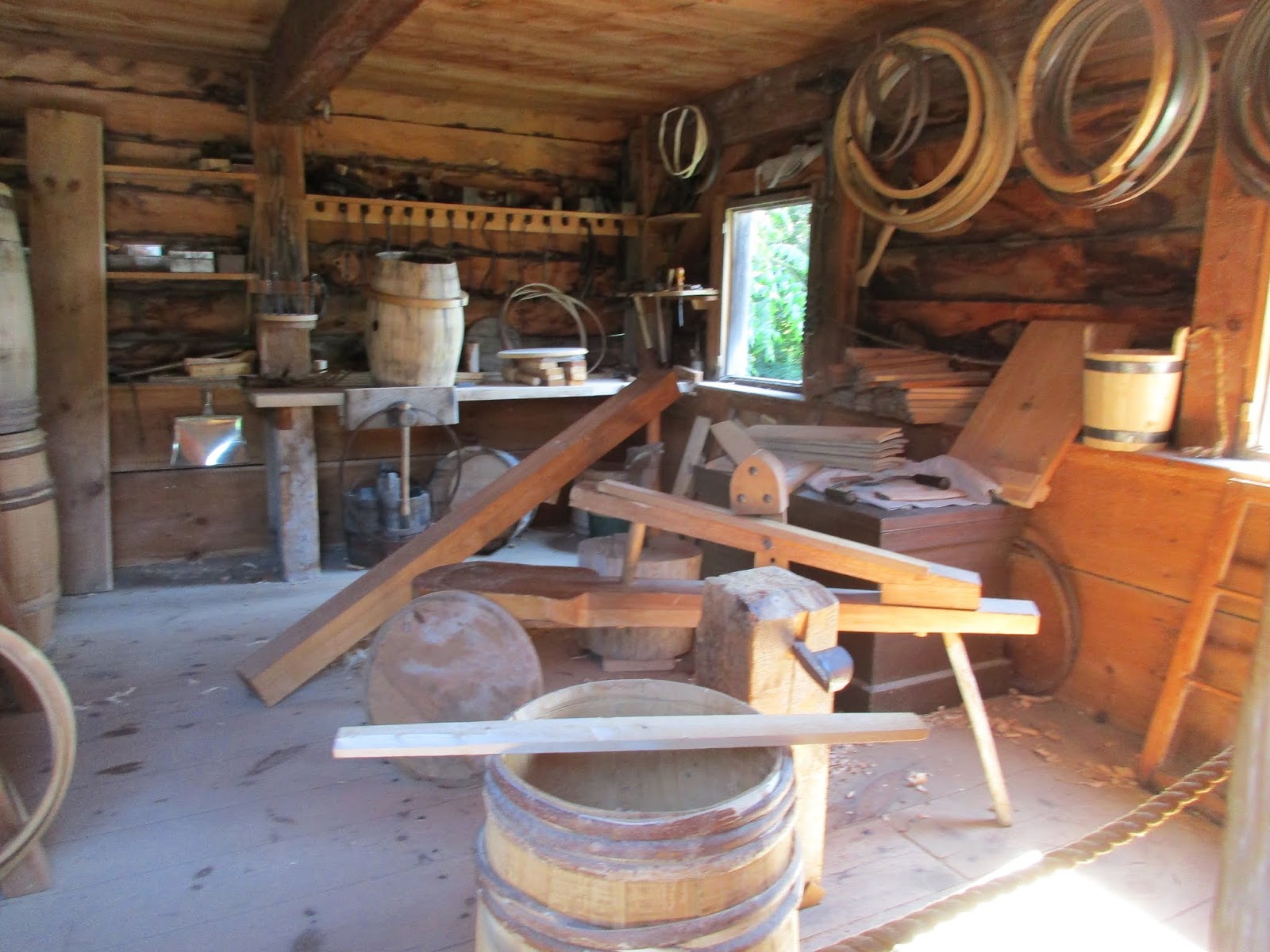
Often when visiting a living history museum such as Old
Sturbridge Village, Williamsburg or Genesee Country Museum, you will see
re-enactors going about their day. Men are doing farm or other vocational
chores. There are demonstrations of blacksmithing, gunsmithing, wheelwrights and
others. The women are gardening or in the homes cooking a meal. They are
spinning and weaving cloth. All kinds of crafts are being demonstrated by
people throughout the village in the way they would have been typically done
during that time period. The jobs were usually done by either one gender or the
other with little overlap, which is why men are typically found in some places
and women in others despite the fact that today, either gender would be likely
to be interested in and doing a particular skill.
Unfortunately, in today’s modern world, we often don’t have
time for this slower pace of doing things. Caught in the hurried shuffle of
life, we never learn these older skills that can now be done by machines, or if
we do, we push them aside and forget about them as we go about our busy days.
It would be interesting for people who are able to do these
skills to be able to present them to fellow genealogists so that we could learn
more about their ancestors. I’m not sure how this would be done. Would it be a
hands on demonstration at a meeting? A YouTube video? Maybe a booklet or
lecture talking about that craft? I’m not really sure, I was just thinking that
it would be interesting to find out more and have a chance to learn these for
yourself if you wanted to.
I have learned some of the older skills, as I’m sure most of
us have from time to time. I can cook from scratch and have done some cooking
over an open fire while camping, so am confident I could put together at least
a basic meal in that manner. I have been slowly teaching myself to can and can
now do water bath canning and am eager to learn more about pressure canning
when I get a chance. My gardening skills are somewhere in the intermediate
level and would be better if only I had more room for a garden! In the
needlework area, I do counted cross-stitch and a few embroidery stitches along
with basic sewing and mending techniques. I would love to advance into making
clothes and quilting, but need somebody to help with one-on-one instruction in
that area. I’ve also done countless crafts over the years thanks to my talented
mother.
Two skills that I would love to have, but have never been
able to learn are crochet and knitting. My mother, although usually a great
teacher, cannot teach me. Every time she has attempted over the years, she has
gotten impatient that I don’t catch on immediately. How could I not be able to
do this being her daughter? I need to have time and a patient teacher who is
not related to me to teach me those skills.
I’d also love to learn more carpentry and basic repair type
skills. Although I can do simple tasks in these departments, I cannot do
anything very complicated.
What skills and crafts would you like to learn? Did your
ancestors do them as well or would it be a completely new arena for you? Any of
the skills that I have, have been ones that my ancestors would have definitely
done. The household tasks, of course, and I know that many of my ancestors have
done crafting over the years, especially Mom. As I descend from many, many
farmers, the carpentry and repair skills are definitely there, not to mention
that my maternal grandfather was a skilled carpenter! So, I am not looking far
back to find others that have done the same type of thing. Learning these
crafts and finding how things have changed over the years can be an exciting
adventure!
Tuesday, May 31, 2016
Saturday Challenge- Occupations
From Randy Seaver: For this week's mission (should
you decide to accept it), I challenge you to:
1) Geneablogger
Diane Gould Hall posted WORKDAY
WEDNESDAY – What kind of work did your ancestors do? on
her Michigan Family Trails blog
last year, and I thought the topic could be used as an SNGF post.
2) Please go back several generations (say parents or grandparents or great-grandparents) and list the occupations that they had in the records you've found for them. You could do this, say, by ancestor table number.
![]() |
| A field overlooking Owasco Lake |
I wondered how to go about answering this Saturday
challenge. I can answer the question for most of my male ancestors with just
one word: “farmer”. My father left the farm, worked as a mechanic/tow truck
driver for a short time. Then worked for
his uncle for a while as a salesman for a Sinclair oil distributorship before
taking it over from him. He then ran this business as his own for the rest of
his working career, but was always a farmer at heart. My maternal grandfather was a carpenter by
trade, although in later years he also worked for the school district as a
janitor. The women for the most part were housewives, supporting their husbands
in their careers; especially those who were farm wives. My maternal grandmother
was a Registered Nurse. There is not much variety to write about.
Then I read a blog posting from Michael John Neill
where he took exception (and rightly so) to somebody saying that an ancestor was just a farmer.
That made me think about the fact many people may not realize what the
occupations of farmer and farmer’s wife entailed, and often still do today.
The farmer is the one that gets up while its still night to
milk the cows and feed all the animals. He may not have had much sleep, as he
had been in the barn just a short while before checking on an animal that was
sick or about to give birth. Maybe there were new baby animals of some sort to
tend to already that morning.
He is the one that gets all the crops planted while checking
the weather for storms and cold spells that will hurt the tender plants. Have
you ever watched a haying crew scramble to get the hay from the field on a hot
summer day when a storm is brewing? They are working at a frantic pace, but
organized and knowing exactly what to do.
I use the pronoun “he” above. However, not all farmers are
men. And did you notice what was happening right along side that farmer when
there was a crisis going on or any type of extra work needing to be done? Yes,
that is the farmer’s wife jumping in and helping where needed. When I posted a
picture of my grandparents’ barn a while ago, one comment was made by my older
brother about something that was missing from the scene. The ’48 IH pick-up
truck pulling up to the barn with a load of hay to be unloaded-- driven by
Grandma.
The farmer’s wife’s traditional sphere was the kitchen.
Getting meals on the table, washing the clothes and keeping the house.
Preserving the harvest for use next winter, mending clothes or sewing entirely
new outfits. All the time while keeping an eye on the children and making sure
they were safe. It was also helping and getting everything done that her
husband might not be able to get to. They were a team.
At other times a farmer is doing many other chores around
the farm. The job, if a written description were made, would go on for pages
and pages and scare any sane person away. The farmer is part veterinarian, part
butcher, part mechanic, part electrician, part carpenter, part meteorologist,
part business person, part bookkeeper, part salesman, part store clerk, part
horse-trader, part blacksmith, part cooper, part herbalist… part many more
things I have missed. Whatever needed to be done on the farm needed to be done
by him his wife or children, often at a moment’s notice, without a chance to
call for help unless it was to his nearest neighbor- another farm family.
So, yes most of my ancestors were “just farmers” and I’m
proud to say that I descend from many, many generations of farmers. None of the
current generations farm other than a small garden or such, but many of our
cousins still do.
Subscribe to:
Posts (Atom)